Start with a formula, not a recipe
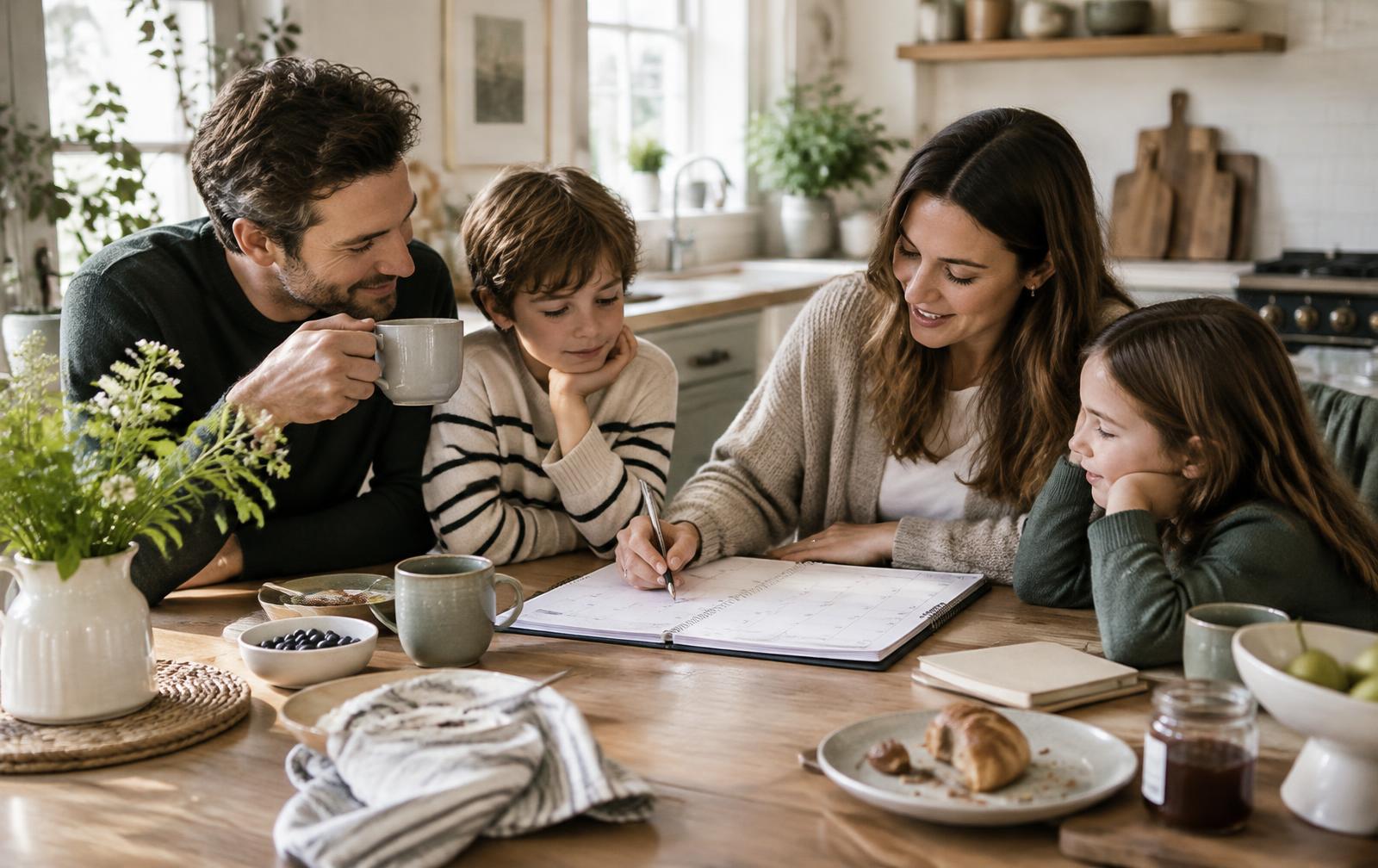
Family wellbeing is built less by dramatic overhauls than by repeatable choices made on ordinary Tuesdays. The useful plan is rarely the purest or most impressive one. It is the one a tired household can still manage when the bus is late and the sink is full.
That means working with the family you have: different appetites, bodies, schedules, and capacities. Health is not a performance. It is enough nourishment, movement, rest, and care—offered with flexibility and without turning home into another place to be graded.
The goal is not a perfect family. It is a family with reliable ways to return to one another.
Serve one reliable thing
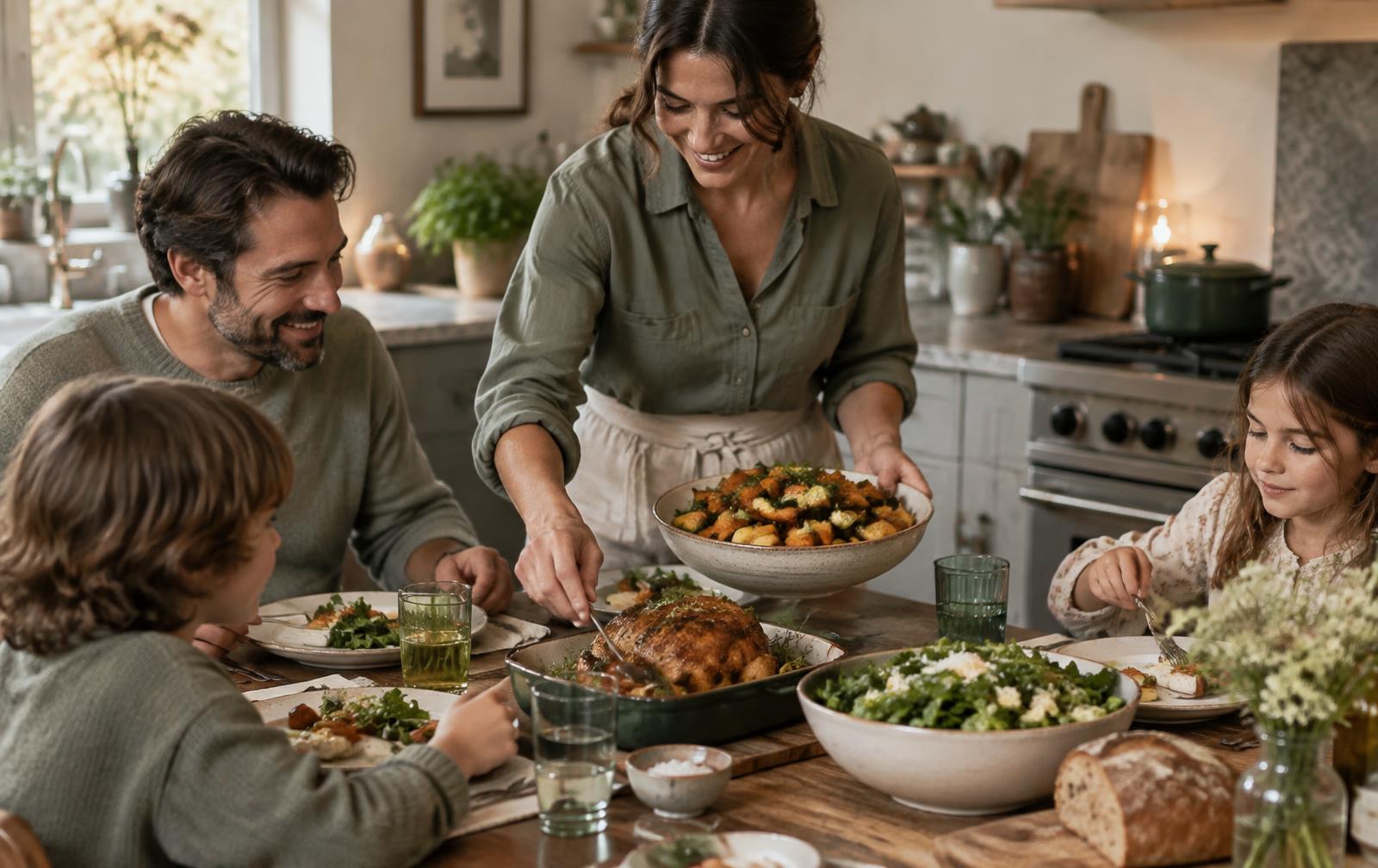
Lower the threshold for success. Put fruit beside the toast, walk one block after dinner, dim the lights ten minutes earlier, or keep a backup meal that requires no chopping. A modest action repeated four times is more useful than an ideal plan attempted once.
Invite children into the process without making them responsible for the outcome. They can pick the music, rinse vegetables, choose between two routes, or set out tomorrow’s water bottles. Participation builds familiarity; pressure tends to build resistance.
Let convenience do its job
Watch what changes the atmosphere rather than chasing a perfect metric. More ease at the table, fewer frantic searches, a child who wakes more steadily, or a parent with ten minutes to breathe are meaningful outcomes.
If a concern about food, sleep, movement, or mental health persists, bring the pattern—not just a single difficult day—to a qualified clinician who knows your family. Practical routines can support care, but they are not a substitute for it.
About the author
Nina Cho is a food editor and home cook focused on flexible meals for real households. She lives in Toronto with her family and an overworked rice cooker.