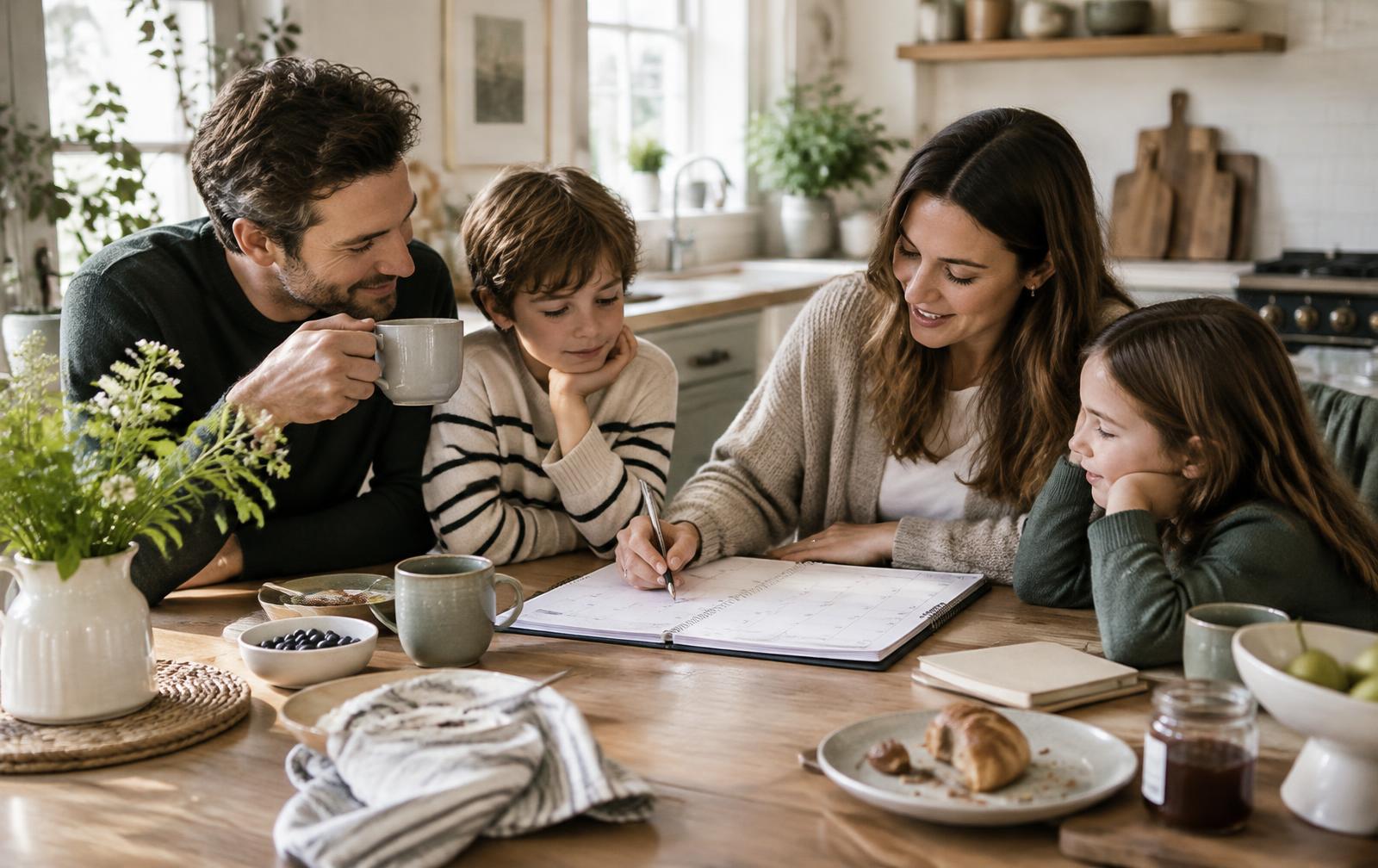
Look for what already repeats
A family culture is formed in repetition: the words said at the door, the meal everyone expects, the way repair happens after a sharp moment. These modest patterns tell children who belongs and what life together feels like.
The goal is not to manufacture magic on demand. It is to protect a few dependable points of connection while leaving room for changing seasons, tired parents, and children who will eventually add traditions of their own.
The goal is not a perfect family. It is a family with reliable ways to return to one another.
Keep the ritual small enough to survive
Attach the ritual to something that already happens: Friday breakfast, the walk home, the first rainy evening of autumn. Existing cues do the remembering for you. Consistency matters more than scale, and missing once does not make the tradition disappear.
Name what the ritual is for. Maybe it gives everyone a place to tell one story, makes transitions gentler, or creates anticipation. When a tradition no longer serves the family, revise it openly. Belonging grows from participation, not rigid preservation.
Let children become co-authors
Expect the ritual to change shape. Toddlers become teenagers; work schedules shift; some weeks ask for the abbreviated version. A living tradition can stretch without losing its meaning.
What children carry is rarely flawless execution. They remember the recurring signal that said: we pause here, we notice one another, and there is a place for you in this family.
About the author
Elise Rowan is an interiors and family-culture writer interested in homes that feel useful, warm, and lived in. She believes the best traditions and rooms leave space for change.