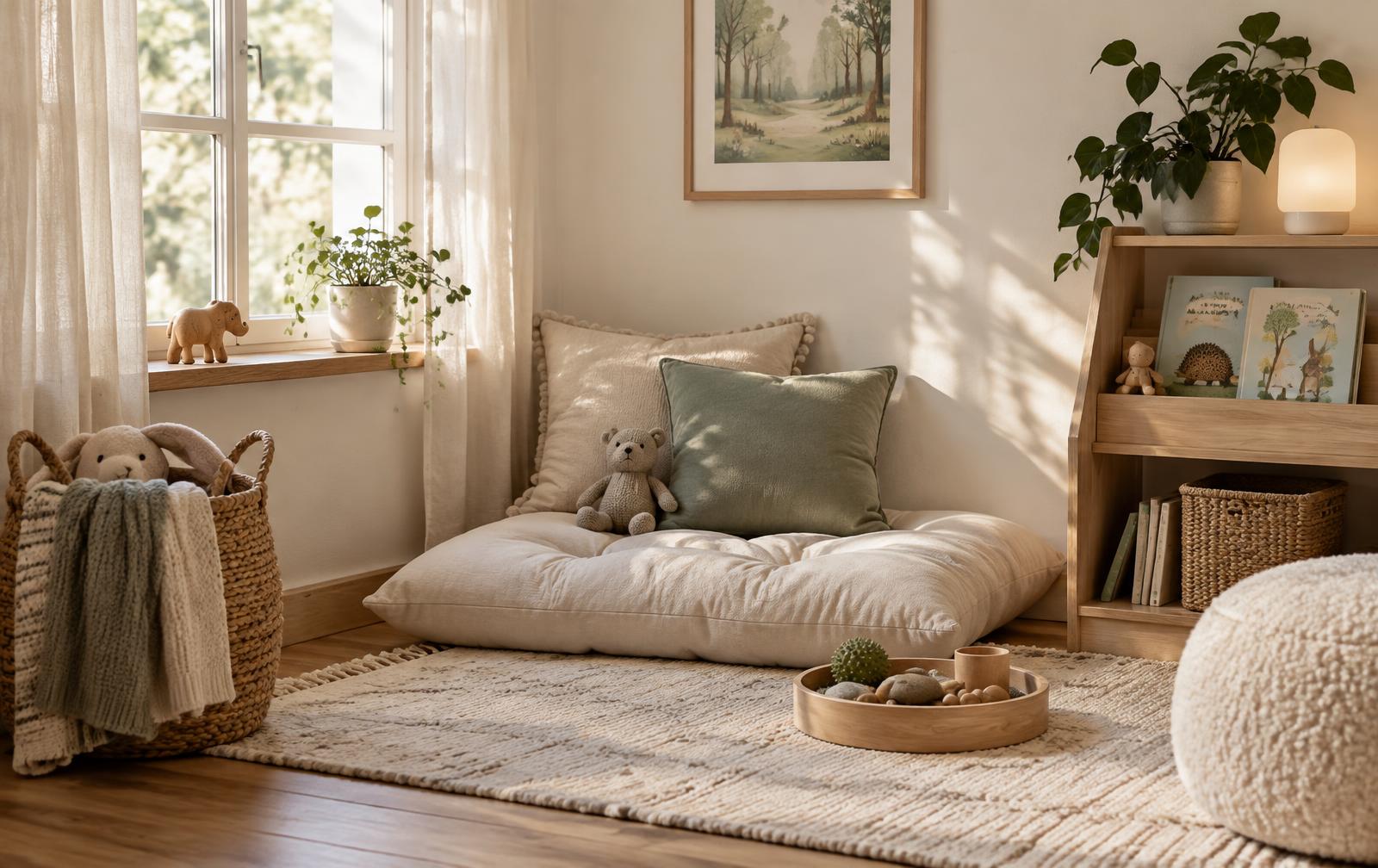
Begin with air and dust
A supportive home does not need to be immaculate. It needs to make the next right thing a little easier: shoes where children can reach them, a place to settle, fewer irritants, and systems simple enough to survive a busy week.
Before buying anything, notice where friction repeats. The best home changes solve a real problem rather than create a prettier version of one. Small, visible adjustments usually outperform ambitious systems that rely on everyone remembering perfectly.
The goal is not a perfect family. It is a family with reliable ways to return to one another.
Change what touches food often
Test the idea with what you already own for a week. A basket can stand in for a new organizer; a folded blanket can define a quiet spot. If the change reduces friction under real conditions, then consider buying the durable version.
Keep the setup legible to a child. Open containers, simple labels, and fewer choices beat intricate sorting. Resetting should take minutes, not an entire precious evening, and the system should bend when the household is under strain.
Skip fear-driven perfection
Notice the result after two weeks. Is the room easier to use? Does the family reach for the new option? Has one repeated argument softened? Keep what works and release what merely photographs well.
A calm home is not one where nothing is out of place. It is one that supports recovery: from a hard day, a spill, a conflict, or the ordinary rush. The most valuable systems make that return feel possible.
About the author
Lena Ortiz, MD, is a family physician and health writer who translates clinical guidance into workable home routines. Her writing is educational and does not replace personal medical care.